A Final Nail in the Coffin
Coffin Cases For Martin Guitars

From Martin's earliest years, coffin shaped wooden cases not only served the owners of their guitars, but first and foremost were used to ship guitars to Martin's distributors. Many of these cases are still affixed with remnants of shipping labels and wax seals. Martin shipped guitars in coffin cases from the 1830's through the end of the Nineteenth Century.
After 1930, Martin stamped the size and style name on the neck block inside the guitar. In earlier years, this information was only indicated on a label inside the case.

Martin cases are typically lined with felt, most often in a purple or plum color.
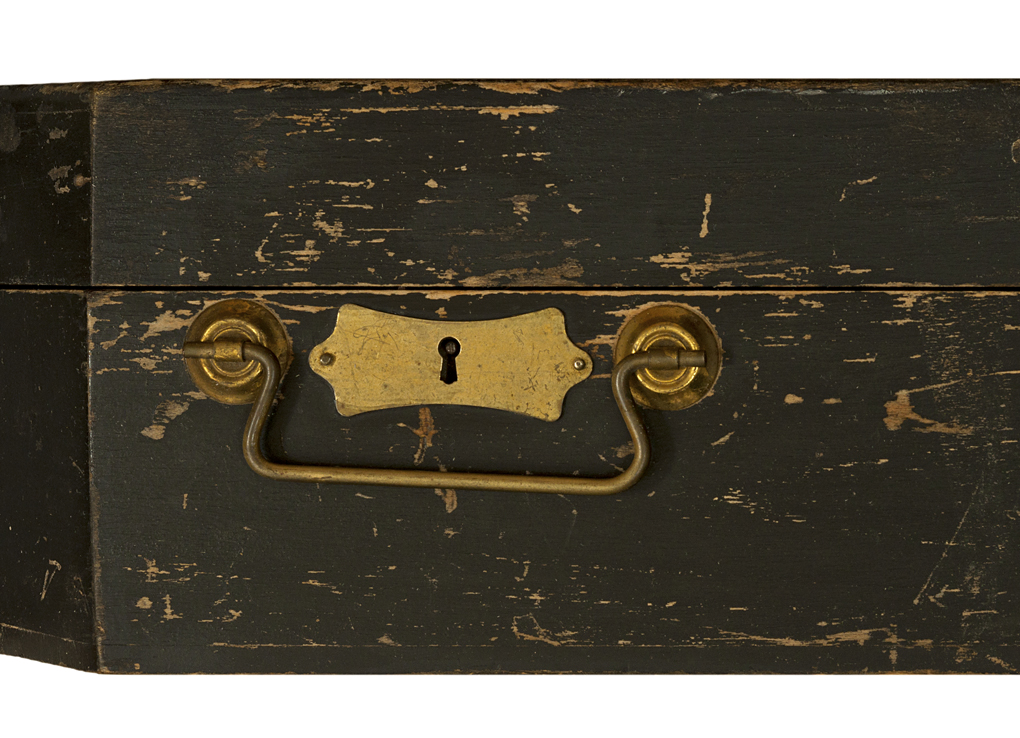
Martin coffin cases always have heavy brass handles which are beautifully contoured. These are consistently of the type of "bail handle" known as "lifting handles", originally designed for British blanket chests, with a built in stop that allows the handle to be lifted to 90 or 105 degrees, and no further, and secured not by built in posts, but by screws passing through the face of the two brass plates or rosettes.
Early brass handles were as small as 2 3/8". Over the years, the handles gradually increased in size, with later handles reaching 3 3/4"

Many old Martins are found today in coffin cases that are assumed to be Martin cases, but are not. As often as not, these cases have thinner handles that look more like a thick bent wire. You will never find these handles on cases supplied by Martin.
Several versions of the early Martin brass case latch used a beatifully machined button which slid downward to release a hook:
Martin 1840's Spanish 1-28
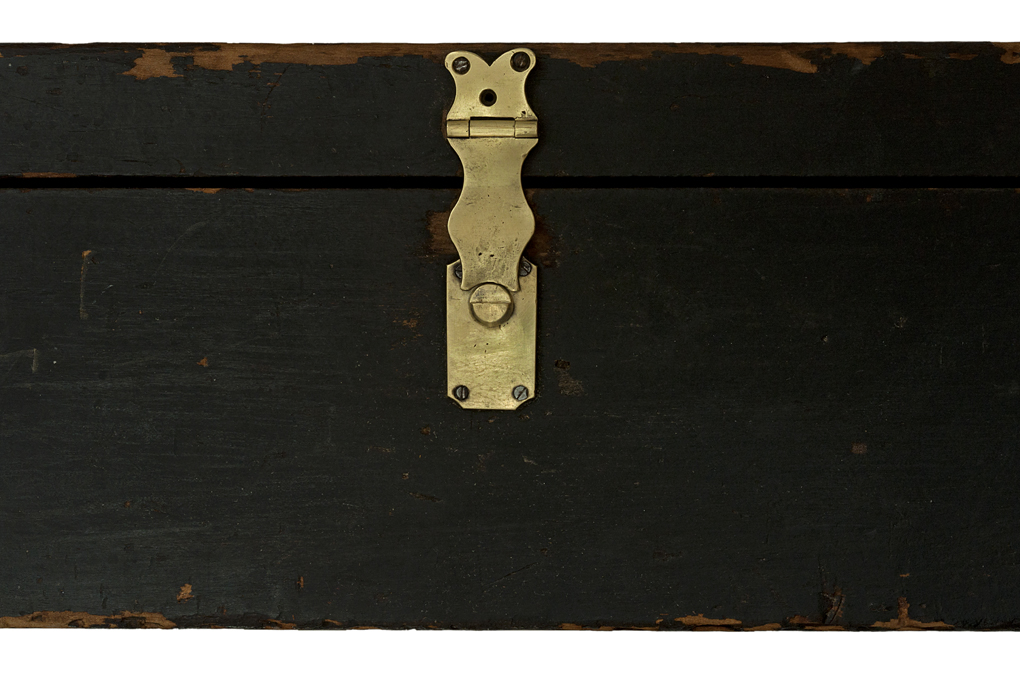
Matin 1870's 2-27
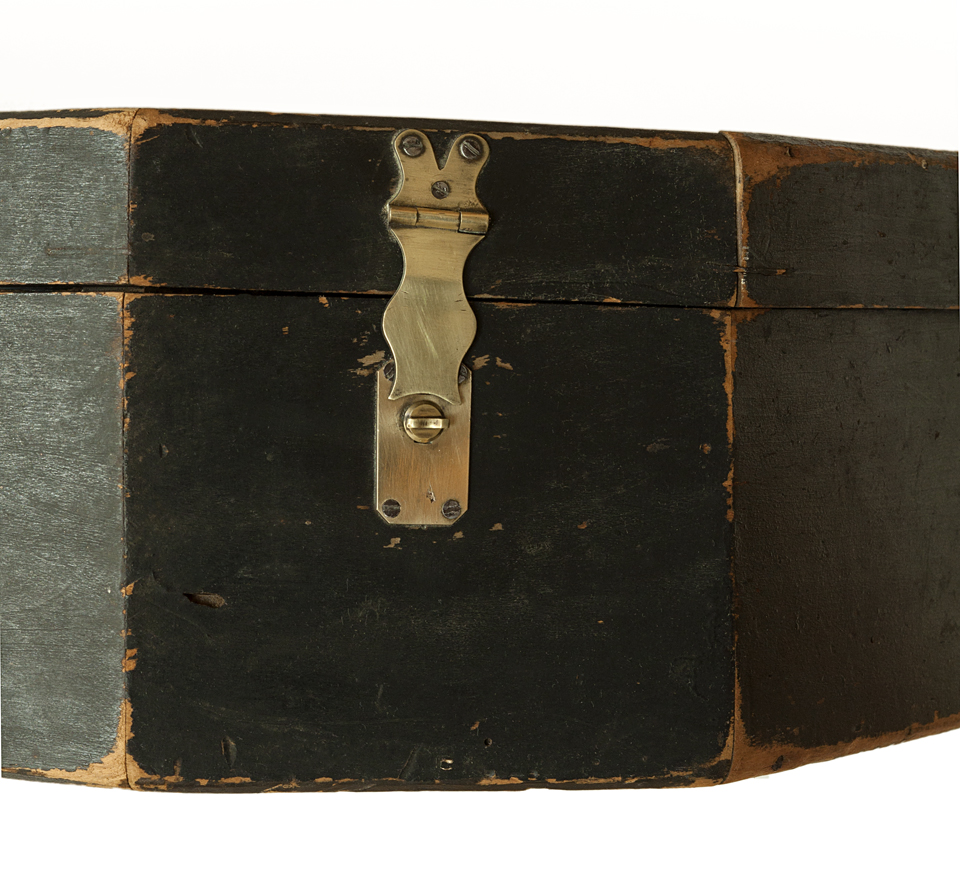
Early Martins, such as this 1837 Hudson Street Martin, often have latches with a twist mechanism to secure the latch. These latches are extremely effective, and usually can be found in fine working order even today.
1837 Hudson Street Martin
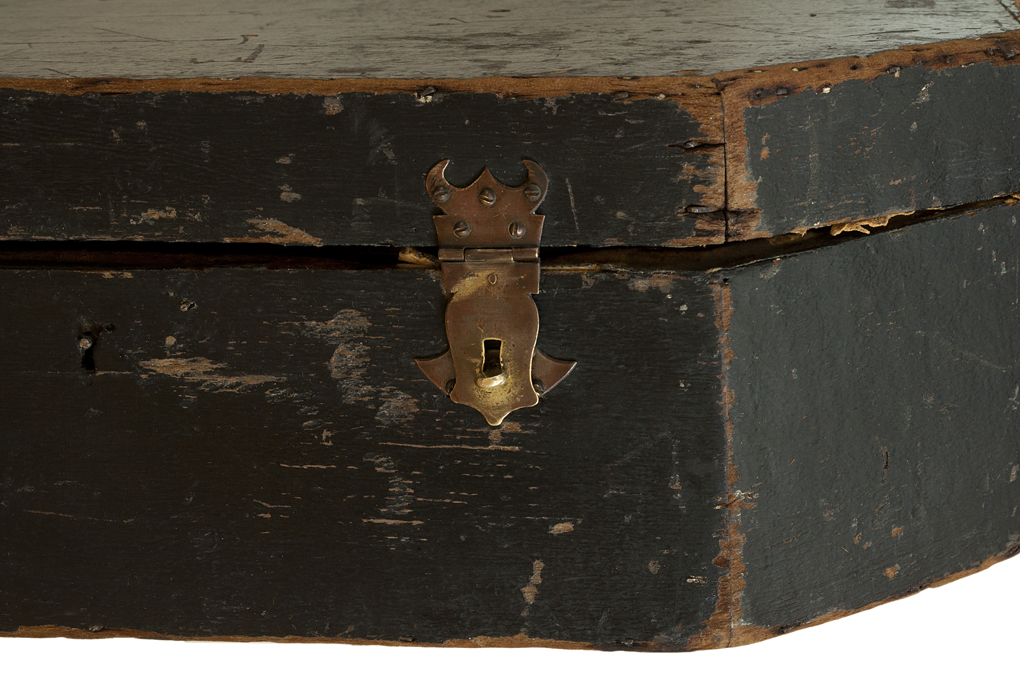
1840 Spanish Martin

Some of the hardware on Martin coffin cases polishes up to a nice shine when cleaned of dirt. Some of this hardware, when polished carefully, retains the rich patina of brass that has been dipped in shellac.
These shellaced latches have a button on the side that slides downward to release the latch.
Martin 0-28 case

1885 Martin 0-34

1870's Martin 1-28
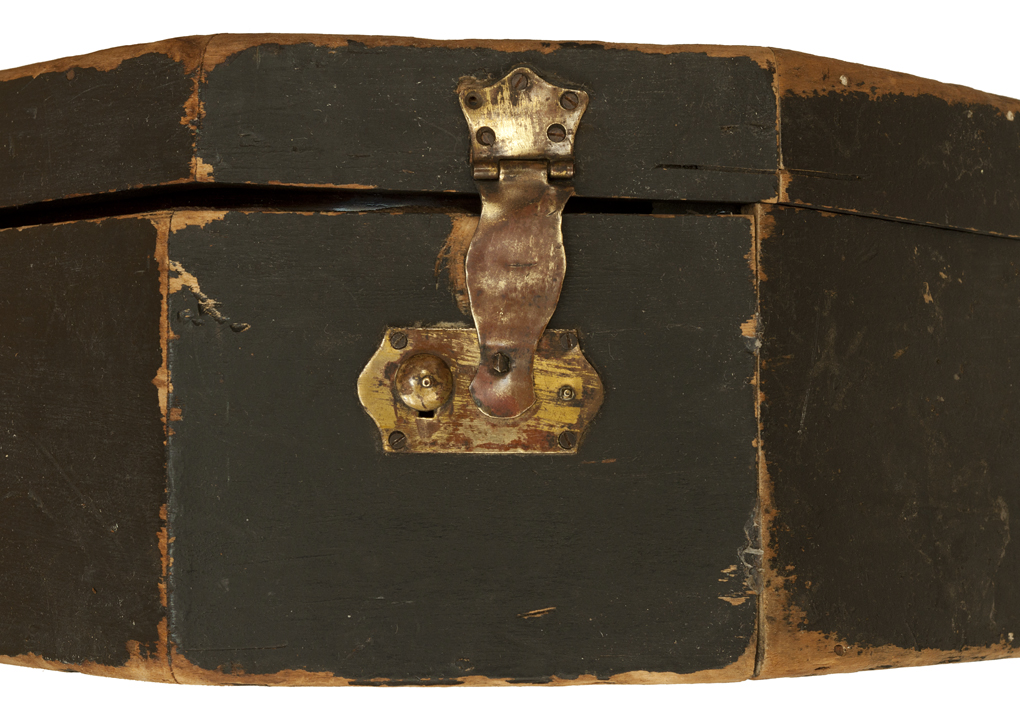
Simple hooks and eyes are usually the sign of an inexpensive non-Martin case, but some Martin cases do have simple hooks and eyes, typically quite long, at 2, 2 1/4 or 2 1/2 inches, and elegantly shaped.
1860's Martin 2 1/2 - 20

This latch design, common in the 1890's utilised hooks which secured a hinged latch.
Late 19th Century Martin 2 1/2 - 17

Martin 1893 2 1/2 - 17

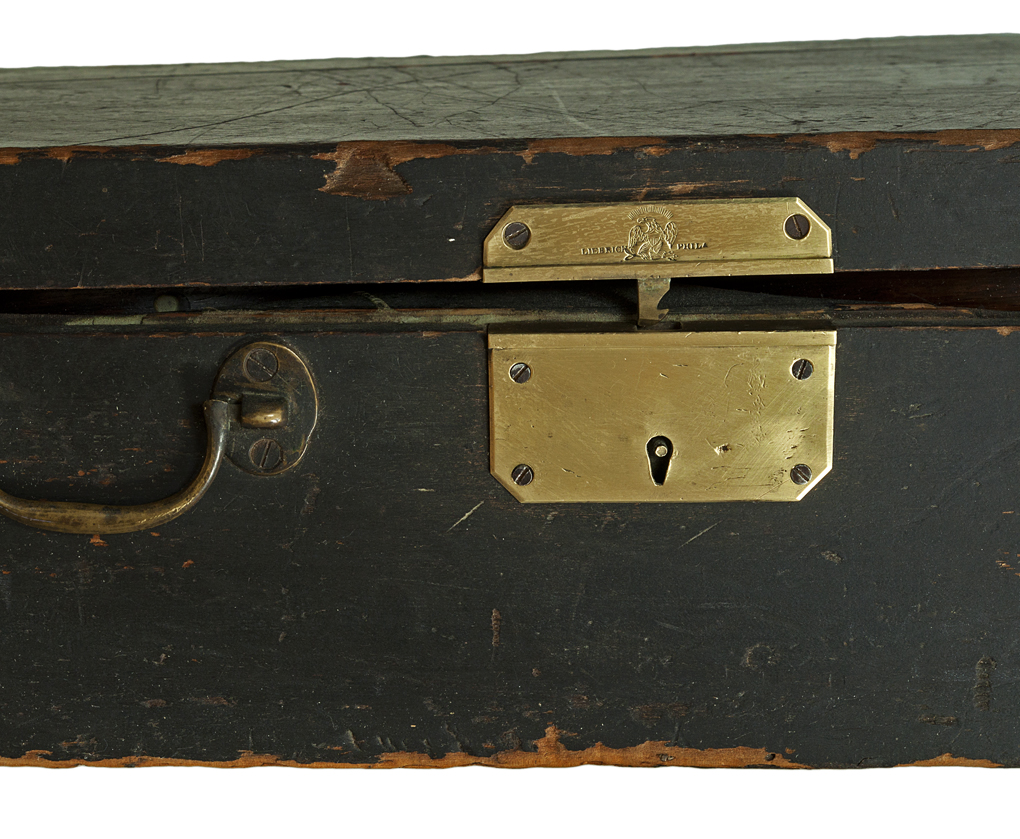
Martin coffin cases were always fitted with a lock and key. Many of the earliest Martin locks were enclosed in heavy brass plates, many without name, this one with an engraved eagle and the name "Liebrich, Phila."
Martin 1840's Spanish 1-28
2 3/4" handle, 1 1/4" base
Through the years, Martin cases used many different designs for decorative plates covering their keyholes.
Martin 1850's 2-20
2 5/8" handle, 1" base

Martin 1855 2-23
2 5/8" handle, 1" base
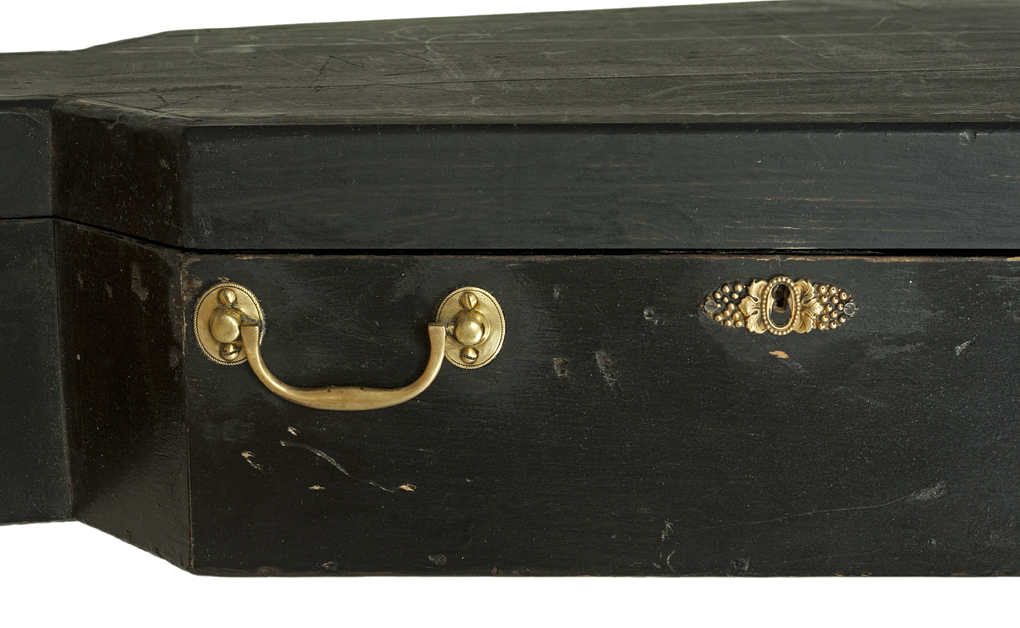
Martin 1860's 2 1/2 - 20
3 3/8" handle, 1 3/8" base
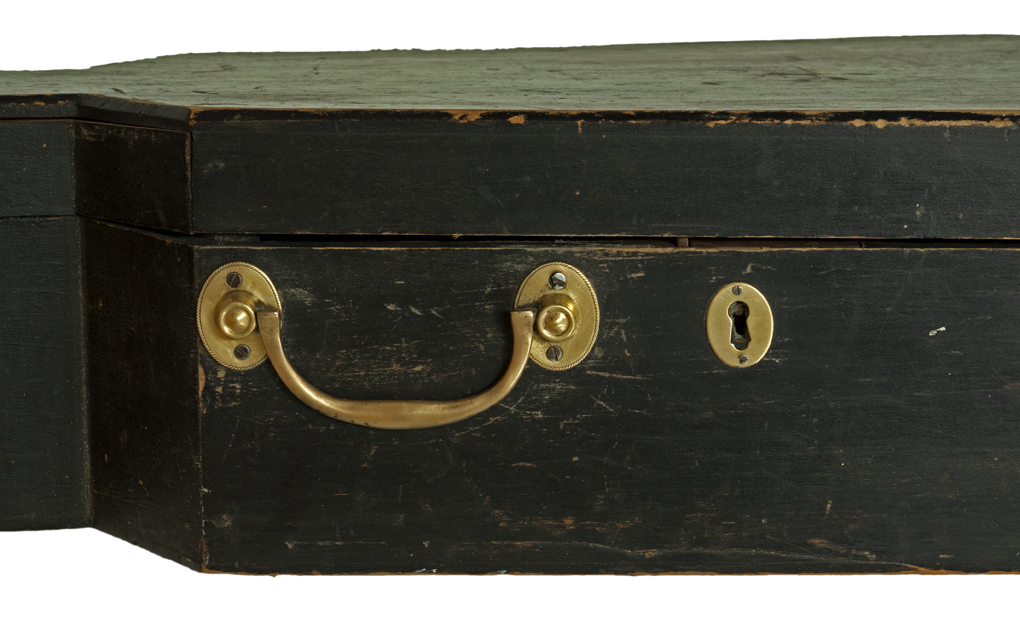
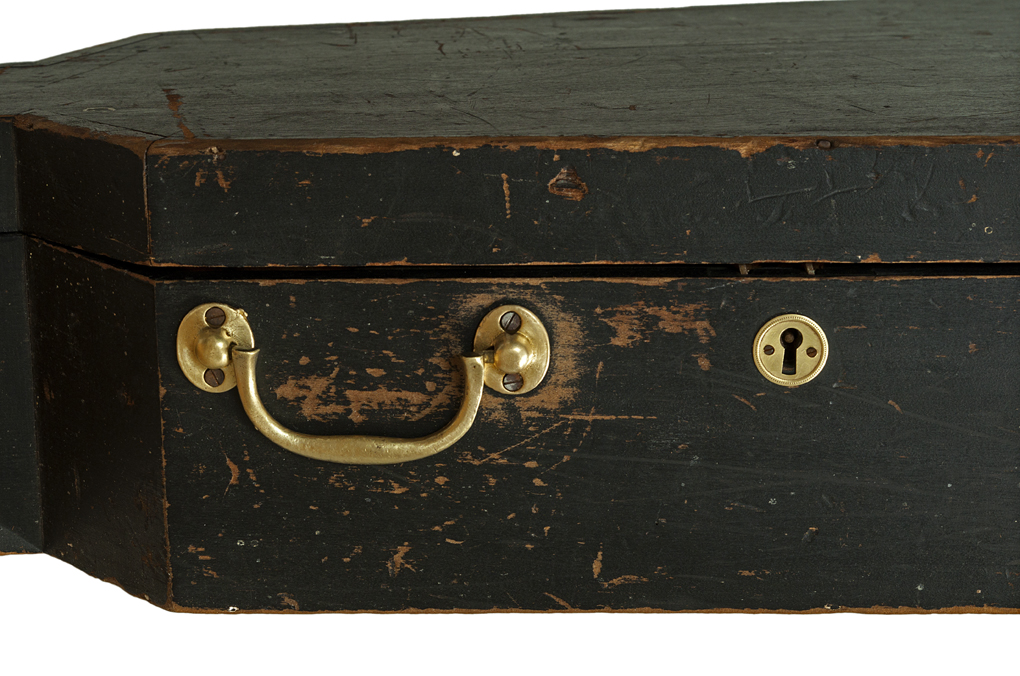
Martin 1870's 0-21
3 3/4" handle, 1 11/16" base
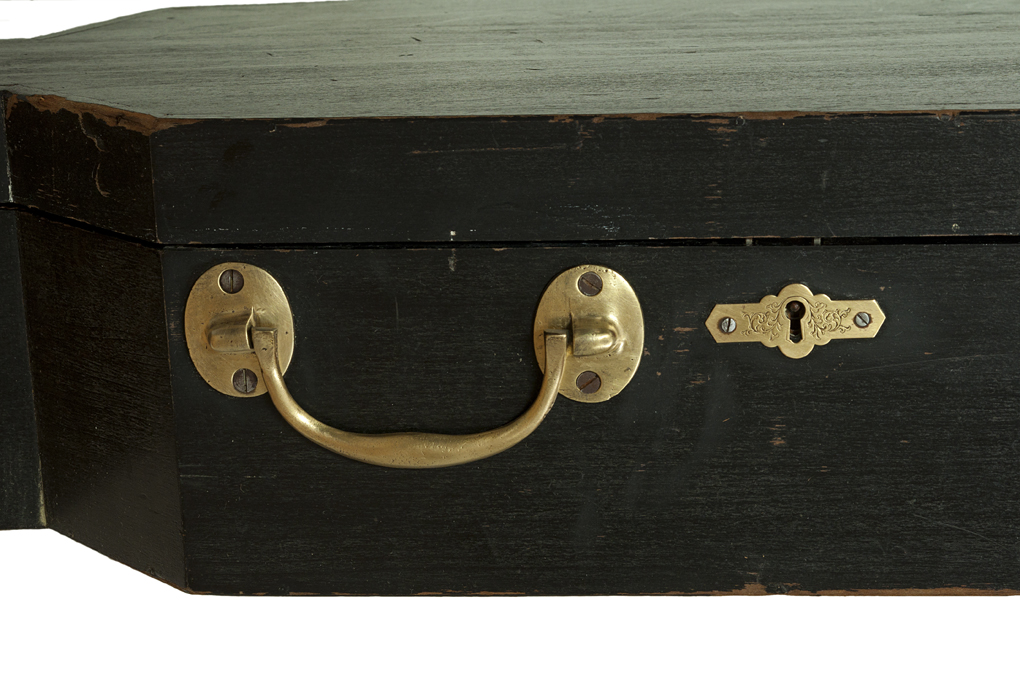
Martin 1870's 1-28
This Martin coffin case has a white keyhole cover that appears to made of ivory.
3 3/8" handle, 1 3/8" base
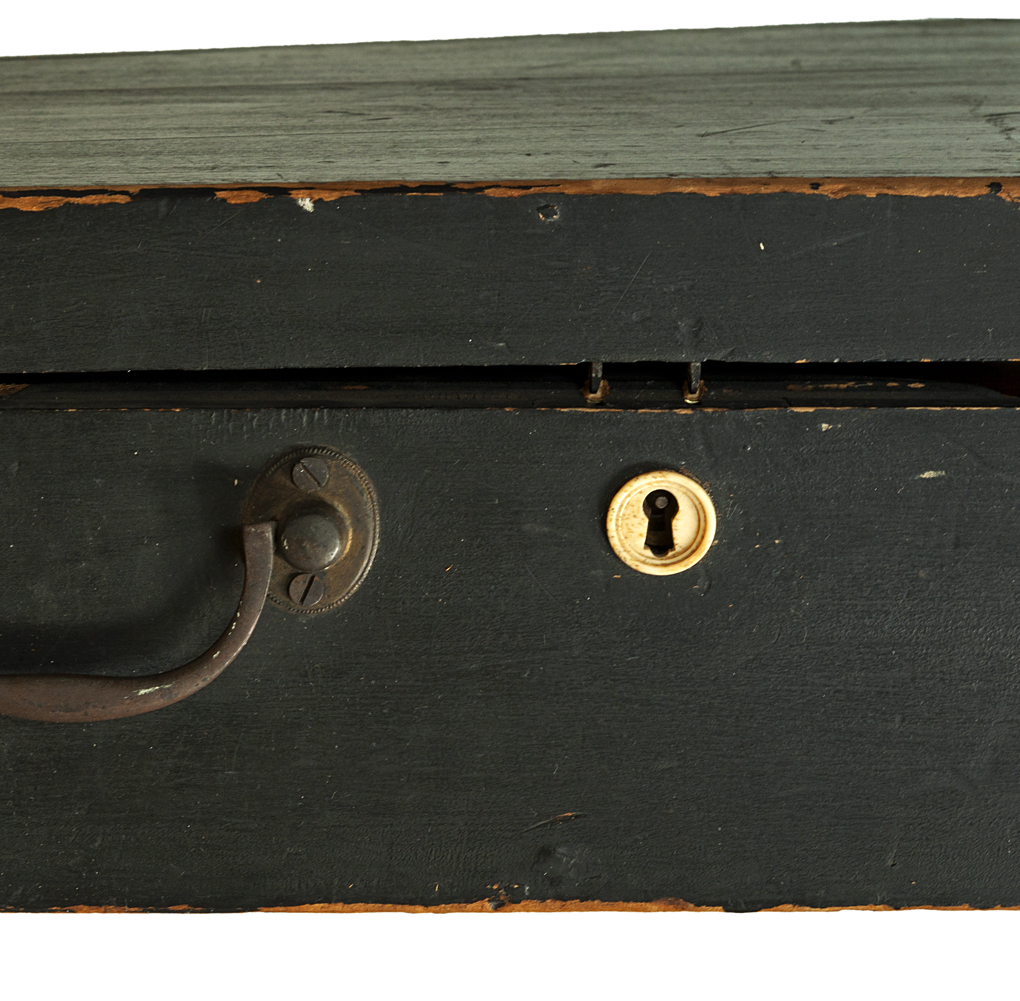
Martin 1880's 1-21
3" handle, 1 1/8" base
Martin cases can usually be distinguished by triangular interior supports at the corners, and often by contoured wooden inserts to fit the waist of the guitar.
1885 Martin 0-34
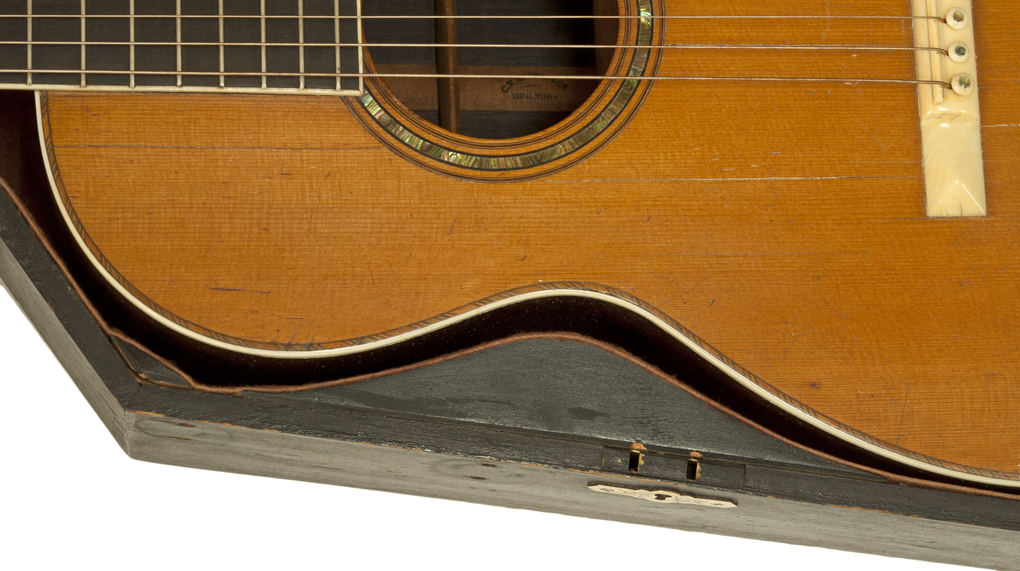
Some Martin cases have no inserts at the waist, but do have the triangular corner reinforcements.
1893 Martin 2 1/2 - 17
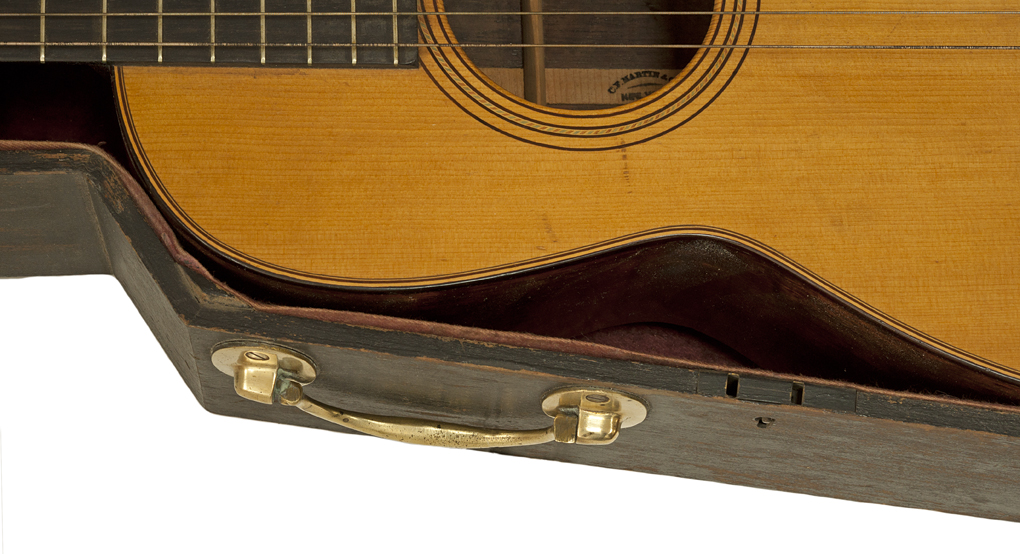
Cases made by James Ashborn for his guitars are among the most finely crafted cases. Note the perfectly fitted lip on the edge of the case to ensure that the case closes precisely:
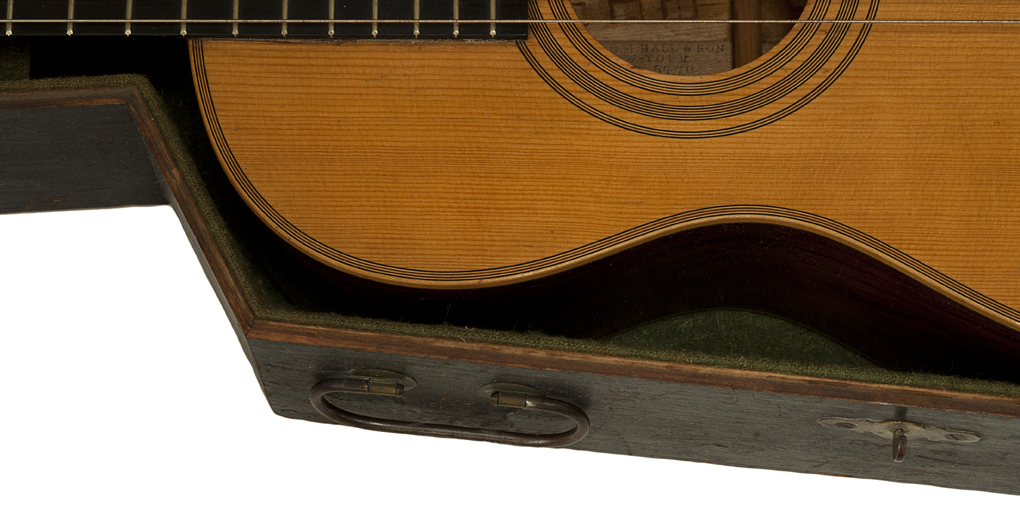
If you look again to compare the Martin cases, you will see that the corner reinforcements rise above the level of the sides, simply serving much the same purpose, aligning the case when closing.
1880's Martin 1-21
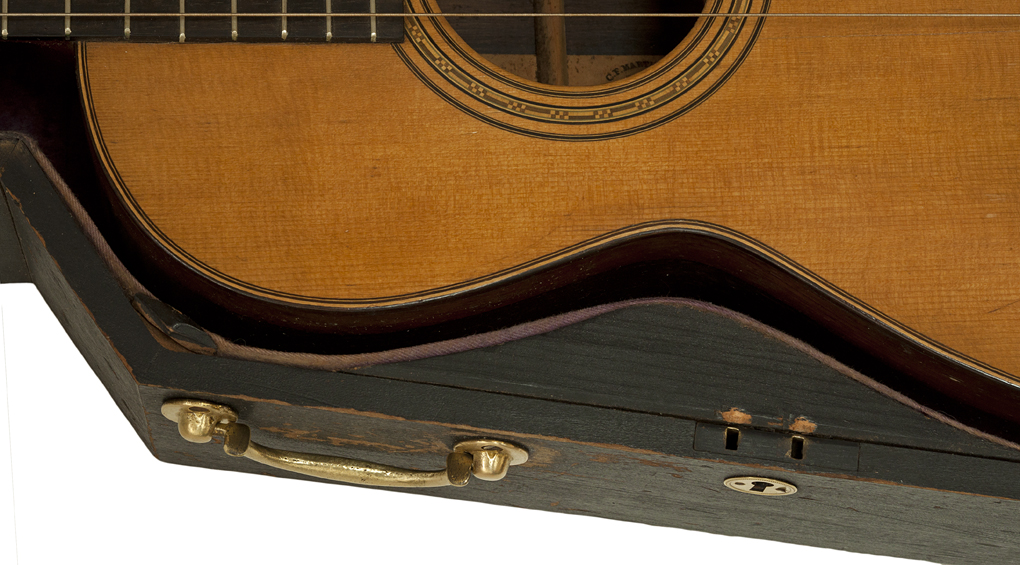
This 1840's early Spanish Style Martin still has sealing wax on the case from a previously attached shipping label.
1840 Spanish Style Martin

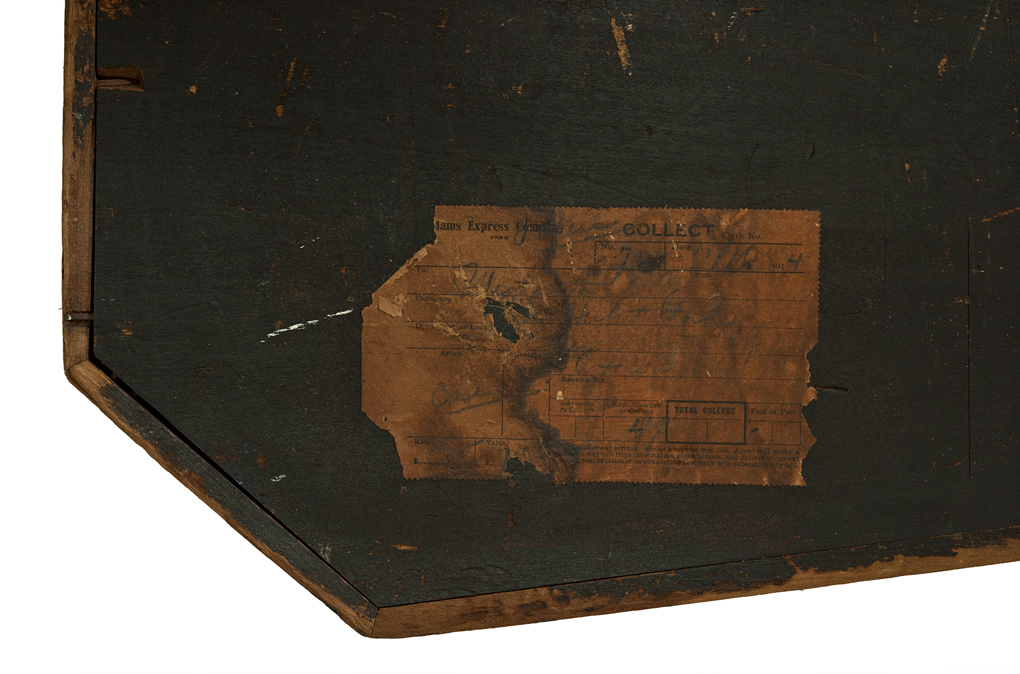
And this Martin coffin case still has a label attached from a COD delivery in 1914.
This coffin case is like no other I've seen, belonging to a guitar built by C.F. Martin in his Hudson Street shop in New York City in 1837.
This perfectly form fitting case fits like a glove and is lined with fine glove suede, with a pearl inlaid ebony button matching the end pin of the guitar on the compartment door. The brass case handle is on the opposite side from most cases, on the same side as the hinges. The oringinal owner's name and address in Philadelphia is printed on the suede lining in ink.

Case Labels

Martin used a number of various labels in their cases, with minor differences in typefaces and design.
c. 1870's 2 1/2 - 26

unknown date 0-28

1888 2 1/2 -17

1893 2 -1/2 17

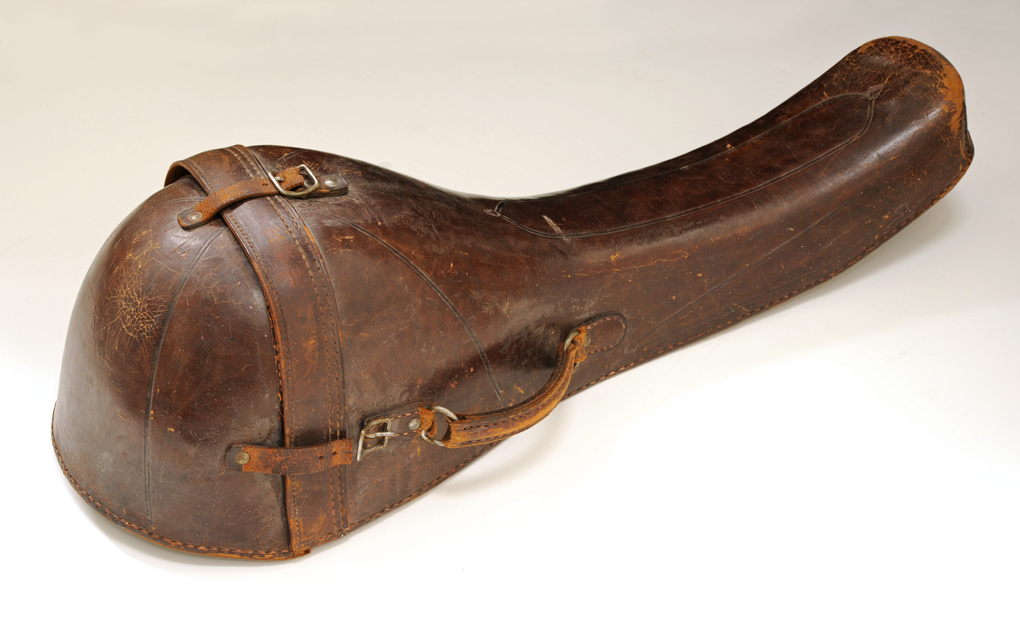
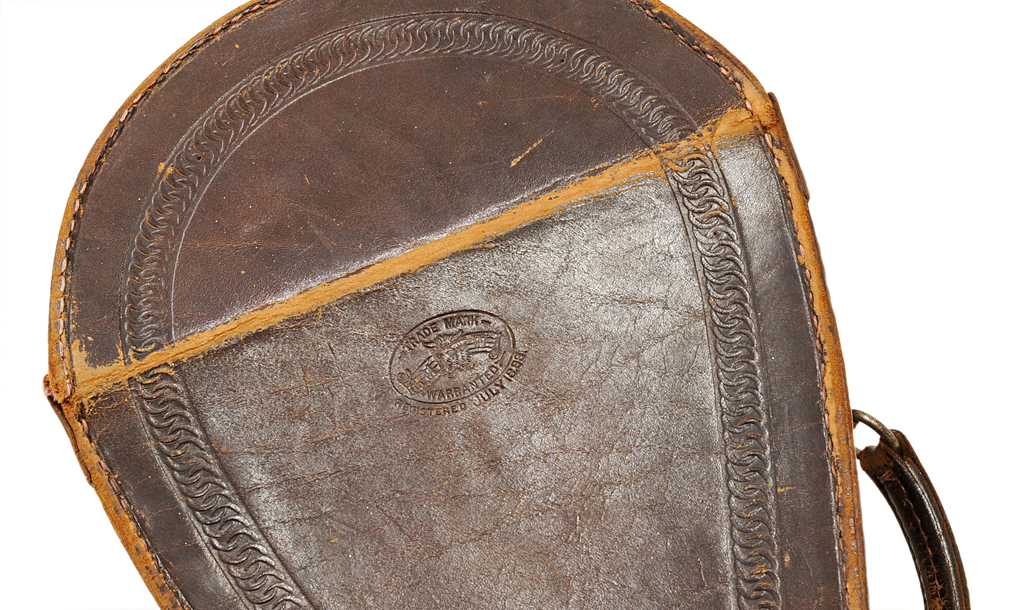
Around the turn of the century, coffin cases were replaced with hand tooled leather cases, or canvas cases for the less expensive models.
Martin 1899 Style 5 Mandolin
vintagemartin.com
To See Robert Corwin's Classic Photography of Folk and Roots Musicians, visit: