Early Electric Guitars
Many of the earliest instruments with electric pickups were lap steel guitars made in the mid 1930's by Rickenbacher, Gibson, and a few other companies such as National.
Rickenbacher Lap Steel Guitars and Amplifiers
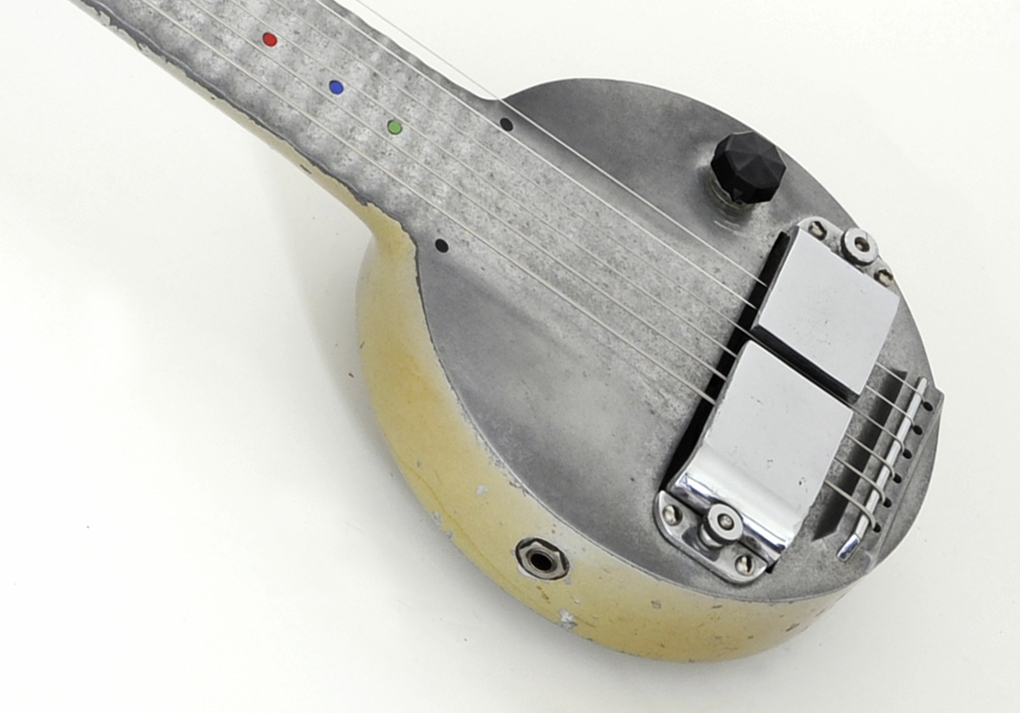
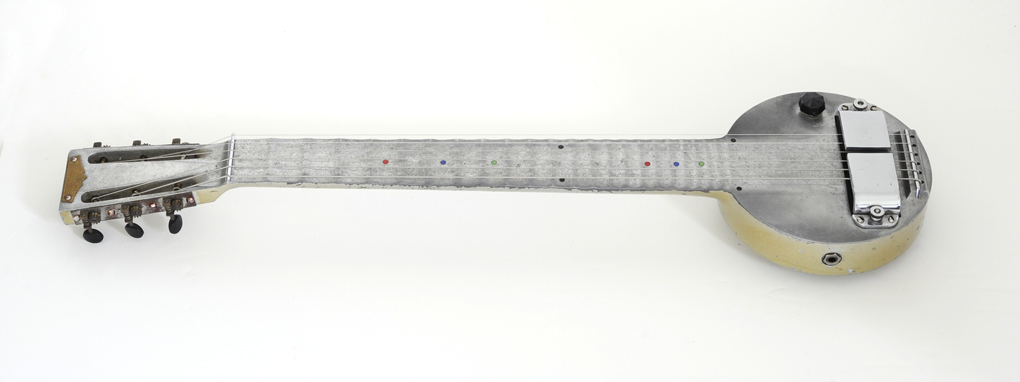
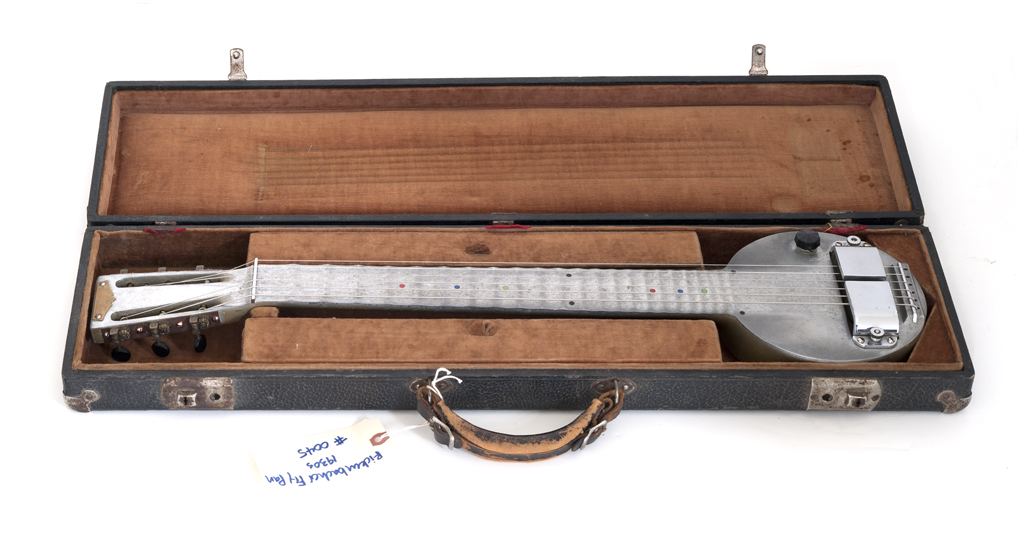
Rickenbacher A-22 Fry Pan Lap Steel Guitar
The earliest electric lap steel made with the Rickenbacher name, which later changed it's spelling to Rickenbacker, with a "K", was made from aluminum. It is known informally as the "fry pan", due to it's shape. Like the best of all pre-war Rickenbachers, the fry pan has a 1 1/2" wide "horse-shoe" pickup, which is considered to be one of the best sounding pickups of any made to date. The narrower 1 1/4" pickups found on post-war Rickenbachers are less desirable and sought after. The earliest examples of the "fry pan" have a volume control only. A tone control was added later.
Rickenbacher A-22 Fry Pan Lap Steel Guitar
Volume control only. 1 1/2" horseshoe pickup.
Serial number 045.
1934 Rickenbacher Amp
#B37


Rickenbacher Electro Model B Lap Steel
While the fry pan remained in production for many years, Rickenbacher soon added another model with a body made from Bakelite.
The earliest of these, made in the mid-1930's, had five chrome plated metal plates.
Rickenbacher Electro Model B Lap Steel
Pre-war bakelite steel with two "arrow" knobs on opposing sides, the volume knob larger than the tone knob, and chrome plates. One replaced tuner.
Serial number C1366

The pre-war version of the model B can also be distinguished by strings that go through the body.

The early Rickenbacher bakelite steels often had Grover tuners with pentagonal buttons and hexagonal plates.

Rickenbacher Electro Model B Lap Steel
Pre-war bakelite steel with two "arrow" knobs on opposing sides, and chrome plates. Original hard case.
Serial number C 2164


Rickenbacher Electro Model B Lap Steel
Pre-war bakelite steel with two "concentric" knobs on same side, and white painted plates. White plastic tuner buttons.
No serial number.


Rickenbacher Electro Model B Lap Steel
Some examples of the model B from later in the 1930's were made with white plastic plates.
Pre-war bakelite steel with two "concentric" knobs on same side, and white plastic plates.

Rickenbacher Bakelite Spanish Electric Guitars
Rickenbacher Electro Model B Spanish Guitar
Rickenbacher also made a round neck version the the model B for standard "Spanish" style playing. The round neck version had Bakelite frets that were integral to the neck. Unfortunately, these frets wore ealisy, and could not be replaced. It was expected that the entire bolt on neck would be replaced when the frets wore. The thinner, round neck was also more prone to warping, so it is not easy to find an example today with both good frets and a straight neck when a Spanish Model B in any condition is extremely rare and difficult to find.
Leo Fender was a salesman for Rickenbacher at the time, and it's surely no coincidence that several of the features on the Rickenbacher found their way onto the Fender Telecaster, such as the bolt on neck, strings through the body, and even the curve of the headstock as it approached the nut.
Rickenbacher Electro Model B Spanish Guitar
Pre-war bakelite round neck "Spanish Guitar" with two "hexagonal" knobs on opposite sides, and chrome plates.
No serial number.


Rickenbacher Electro Model B Spanish Guitar
Pre-war bakelite round neck "Spanish Guitar" with one "hexagonal" knob, and chrome plates. Unusual early example with only four chrome plates. and without the cavity in the body usually covered by a center plate. Certainly one of the very first production solid body electric guitars in existance.
Serial number B36.


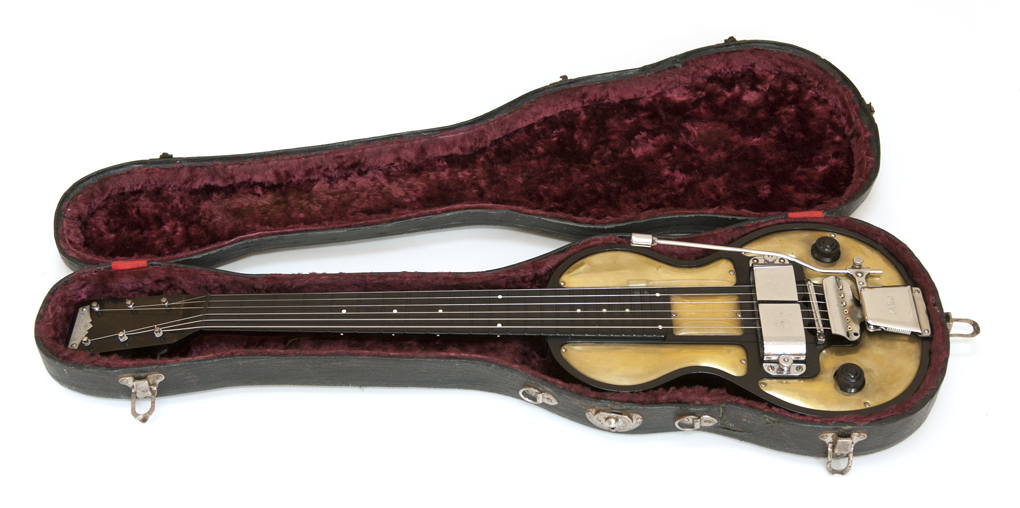
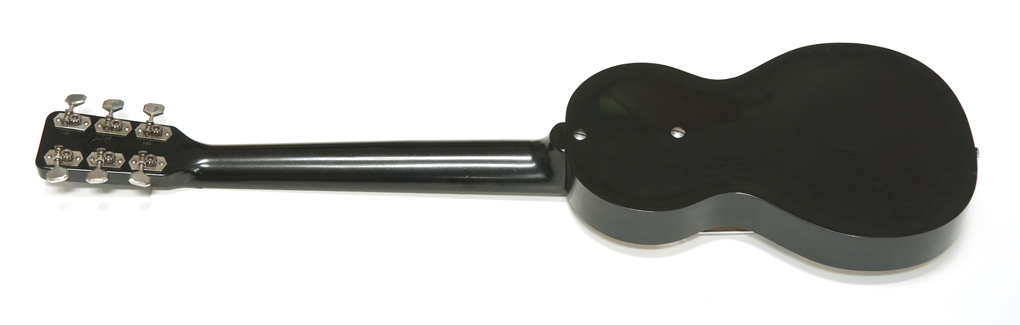
Rickenbacher 1930's Model B Tenor Electro Spanish Guitar
Black Bakelite body, with wooden neck and conventional frets. 1 1/2 inch "horseshoe" magnet pickup.
Five chrome plates. Kauffman vibrato. One bakelite knob on lower bout.
Extremely rare tenor version of the early and rare "Spanish" round neck Bakelite Rickenbacher,
the first production solid body electric guitar, first made in 1935. Made in the one knob version through 1937.
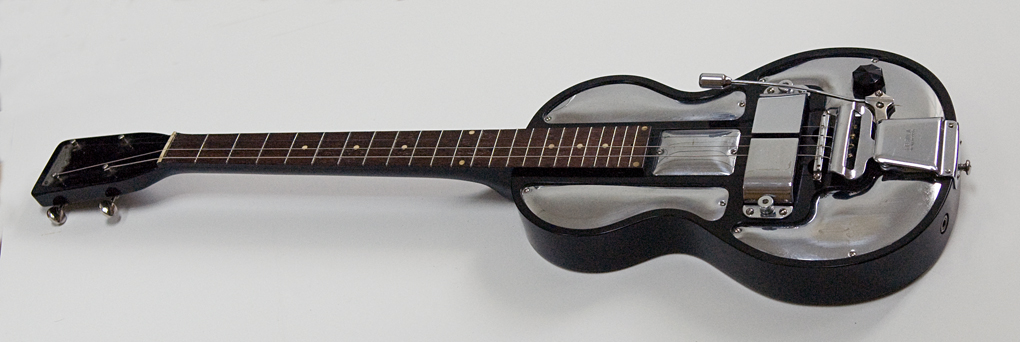
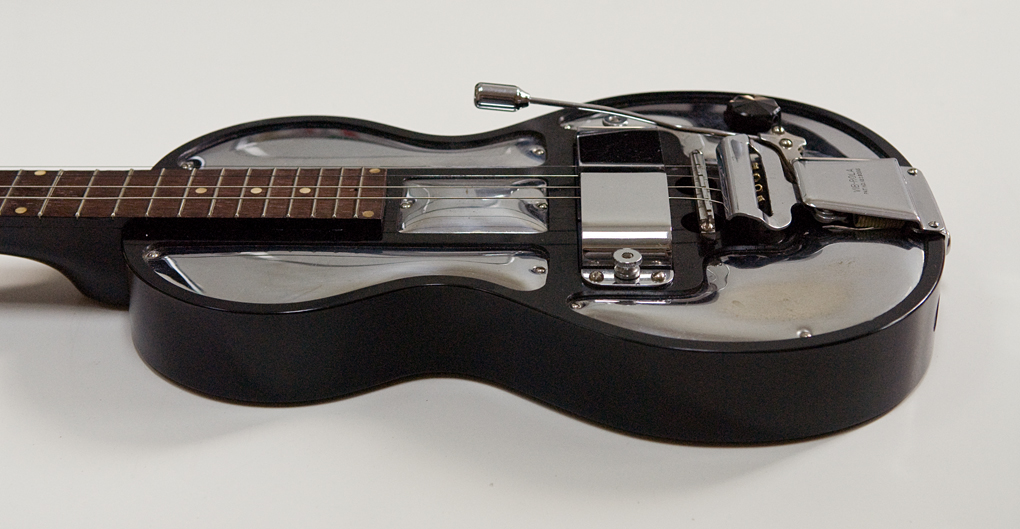
The "Vib-Rola" was invented by Doc Kauffman, who would later join ranks with Leo Fender to start the K&F Co., the precursor to the Fender Musical Instrument Company.
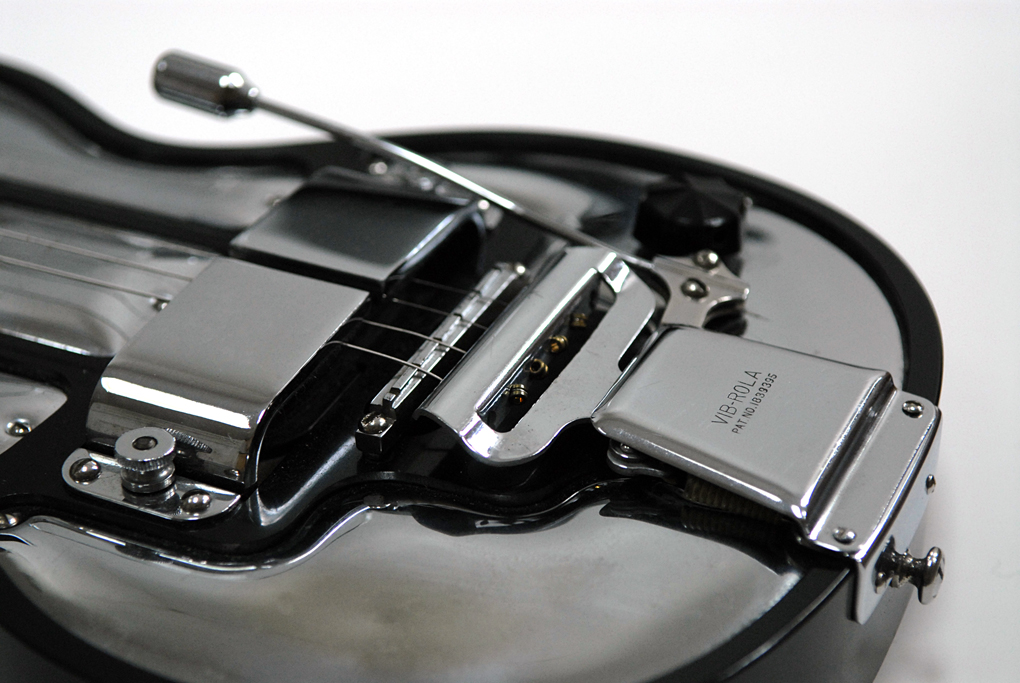
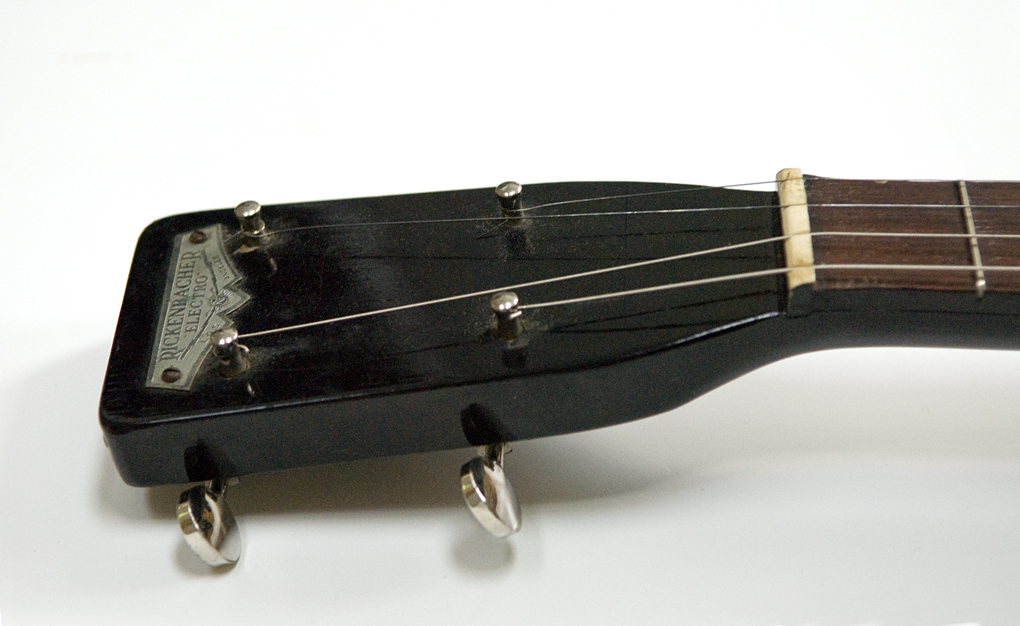
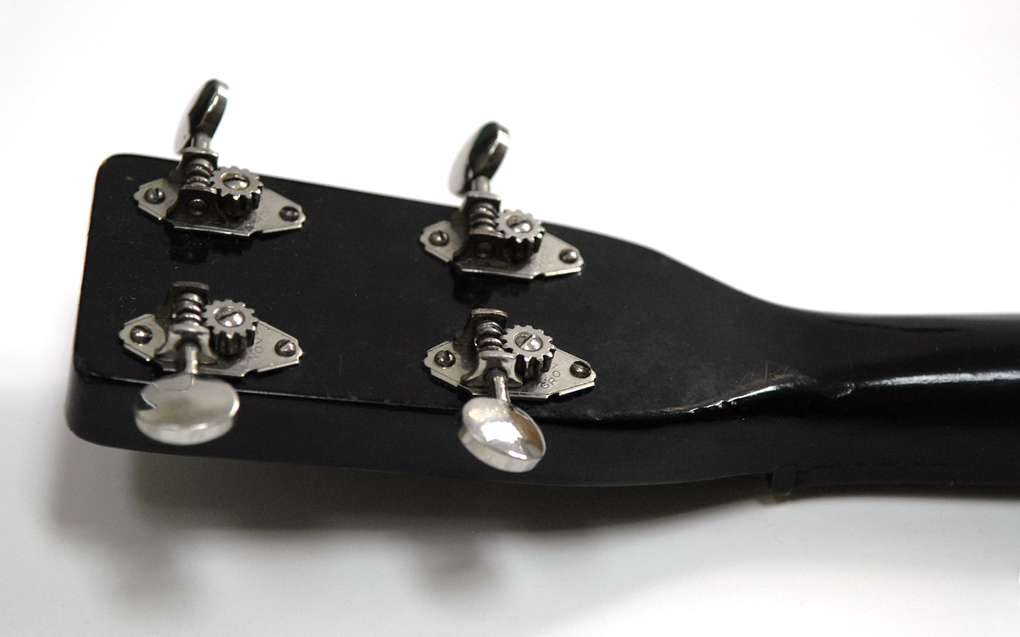
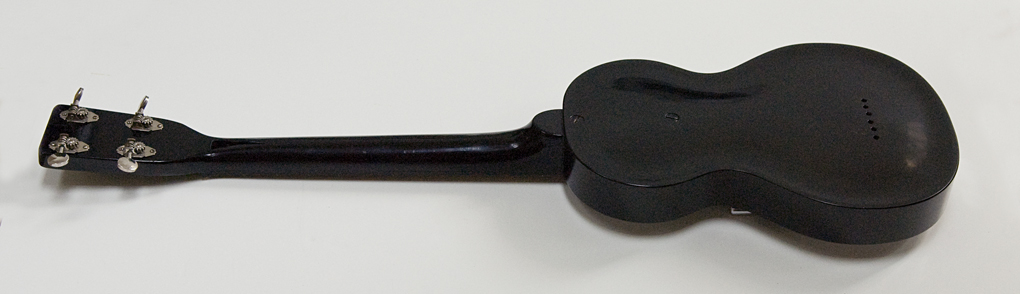
Rickenbacker Spanish Model B with Vibrola.
This is a six string version of the Spanish Bakelite Rickenbacher with Kauffman Vib-Rola.

Gold Plated Rickenbacker Spanish Model B with Vib-Rola
This unique example must have been custom ordered by a discriminating customer to have gold plating on the metal plates on the face of the guitar.

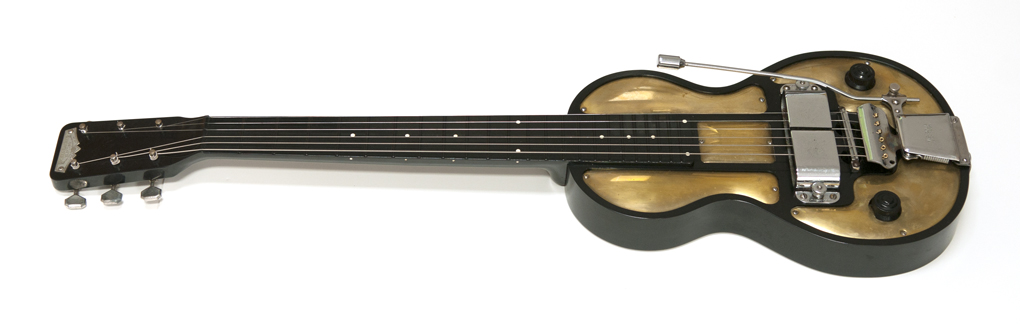
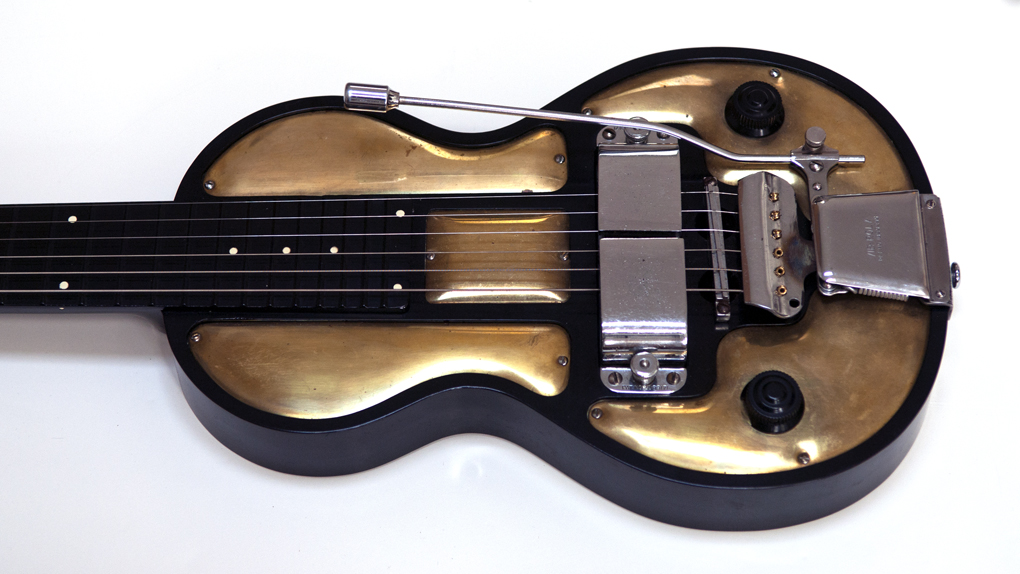
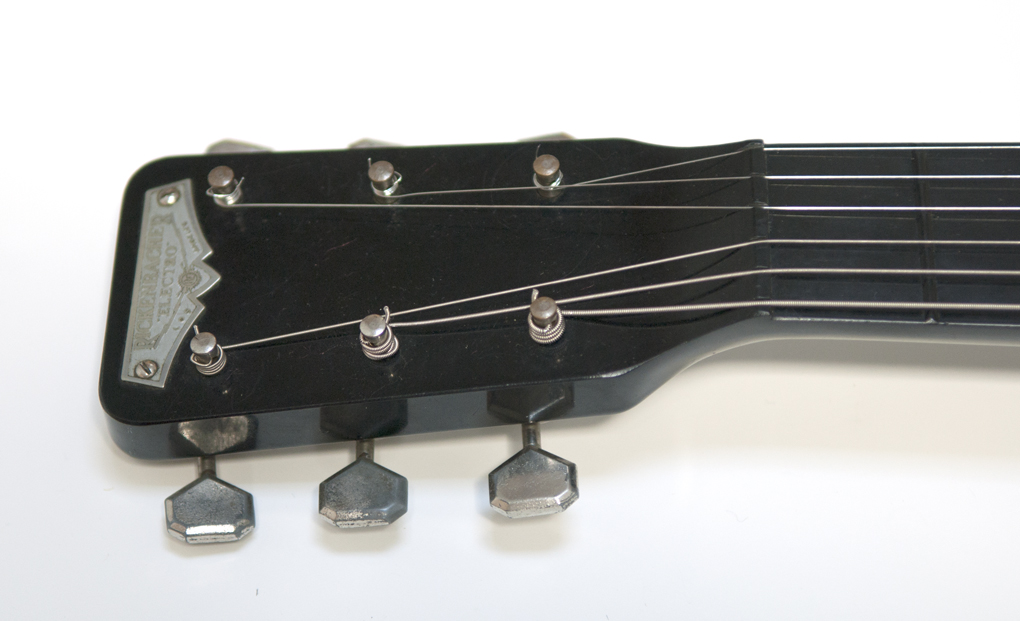
Rickenbacher Electro Spanish Model B Vibrola Guitar
This model had a double thick body which contained a motor which pulled on the strings to give a vibrato effect. This design was also an invention of Doc Kauffman.
Rickenbacher Electro Spanish Model B Vibrola Guitar
Working Kauffman Motorized Vibrola Tailpiece
22 5/8" scale
c 1939
Serial number C2733


1955 Rickenbacker Combo 800 Guitar
The earliest standard solid body guitar produced by Rickenbacker included a double coil "humbucker" style version of the horseshoe pickup.
The first digit of the serial number represents the model "800", the "C" stands for "Combo", the "5" indicates the year, "1955", and the final two digits indicate the real serial number, #62, for the 62nd guitar of this style.
Serial Number 8C562

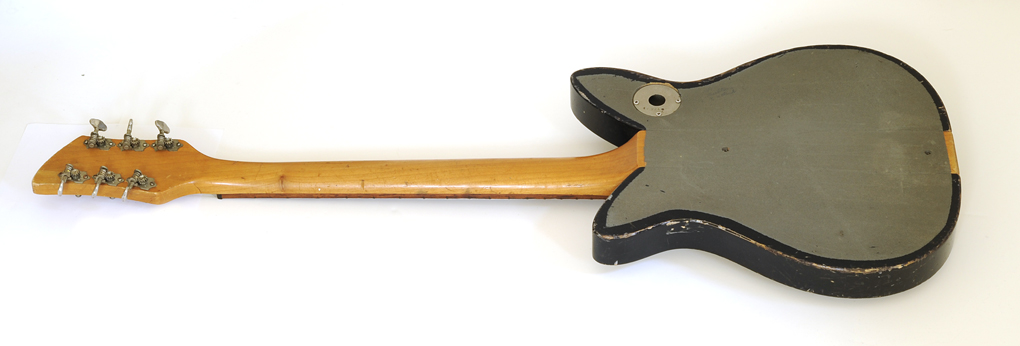
1957 Rickenbacker Combo 400 Guitar
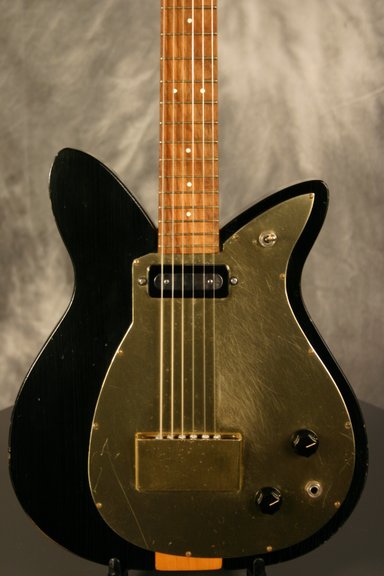
The Combo 800 was soon followed by the "tulip shaped" solid body Rickenbacker Combo 400 which included a single coil pickup.
Serial number 4C7344
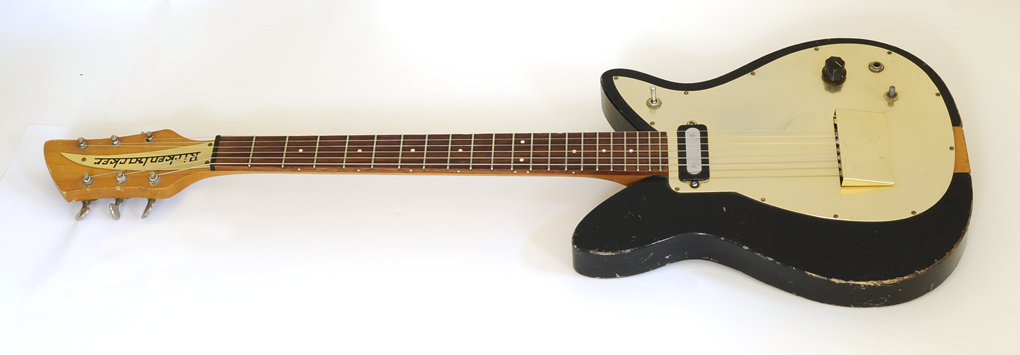
1956 Rickenbacker Combo 400 Guitar
Serial number 4C6121
Gibson Lap Steel Guitars and Amplifiers
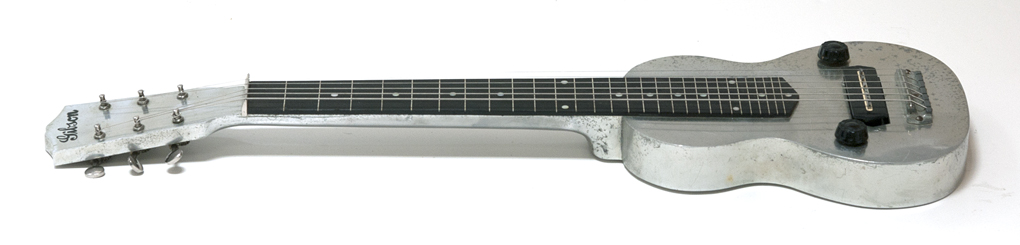
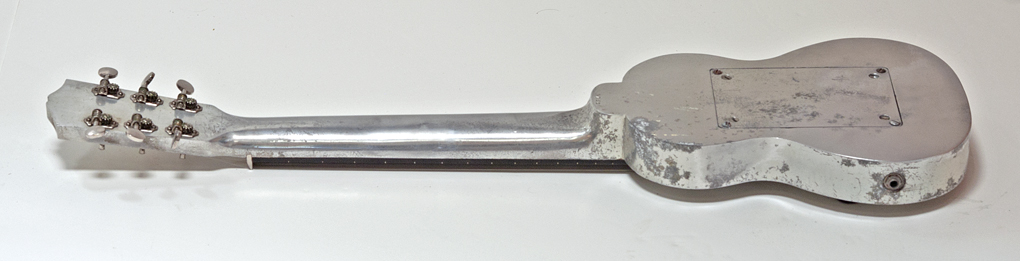
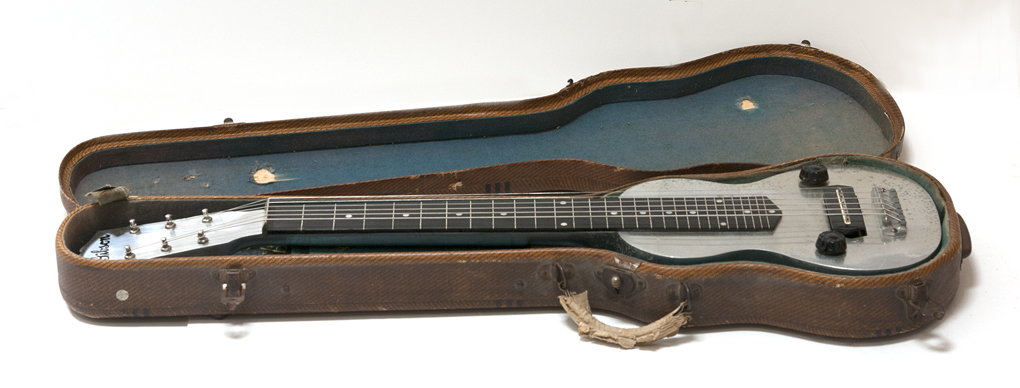
Like Rickenbacher, Gibson also made their first lap steel guitars with an aluminum body. These guitar had the same style of pickup made famous by Charlie Christian on the arch top guitars he played with the Benny Goodman band.
Gibson E-150 Lap Steel Guitar c 1935
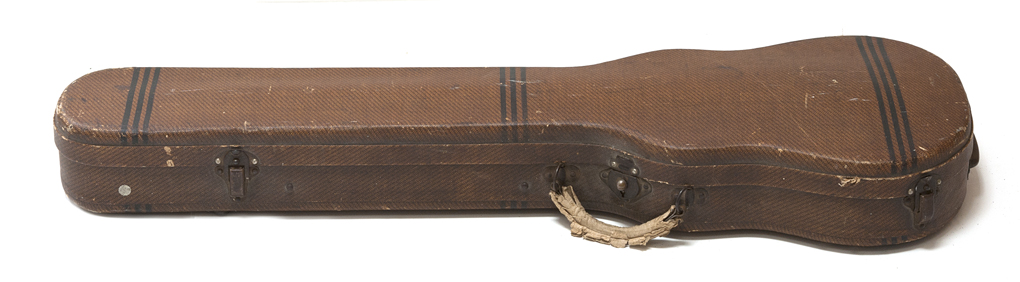
Early version Gibson lap steel with aluminum body and "Charlie Christian" pickup. Original hard shell case.
serial number 231
Early Gibson EH-150 Amp
Second Variation of First Version


The E-150 soon gave way to the wood body EH-150.
Gibson EH-150 Lap Steel Guitar c 1939
Separate treble pole piece style "Charlie Christian" pickup. Separation or crack on top near bridge. Original hard shell case.
serial number EGE 2644


Gibson 1936 Recording King Roy Smeck Lap Steel
Serial Number 244-17

The early Roy Smeck Recording King Lap Steel was made in a number of different models, some of which had a pear shaped body, without "shoulders". Smecks were made with a number of different variations of the peghead shapes found on Gibson "contract" guitars made for other firms, as well as Gibson "Kalamazoos", some of which had the fancy "Crest" Insignia, and some of which were blank and solid black.
Serial number FWE727

Some of the Gibson and Recording King lap steels have "screw-on" backs.

Gibson Pedal Steel Guitars
1941 Gibson Electraharp Pedal Steel Guitar
The Gibson Electraharp, designed Gibson machinist John Moore and endorser Alvino Rey, was Gibson's first pedal steel guitar, and the first modern pedal steel by any maker to enter the market.
Factory Order Number E4141-1
This example, with the Factory Order Number E4141-1, was the very first pedal steel guitar to be produced by Gibson, the first of a batch of 10 instruments. According to the literature, a total of 13 guitars were made before the war, although a second, larger batch appears in the Shipping Ledgers with the FON 5091. Because of a patent dispute, production was halted until after the war, when the early Electraharp design was replaced by a much less sophisticated and desirable design.
The Electraharp was Gibson's most expensive product, priced at $477, over 30% more than Gibson's fanciest Super 400 arch-top guitar.
This first Electraharp was owned by Gibson endorser George Hines after being shipped to the N.Y. Band Company in September, 1941.
"The first modern, professional quality pedal steel...extremely rare and quite a conversation piece." - Gruhn's Guide to Vintage Guitars.


Gibson Archtop Electric Spanish Guitars
Gibson's Electric Spanish is recognized as being the first production conventional guitar with an electric pickup.
1937 Recording King Roy Smeck #1128
Serial Number 342C2
Early model with volume control only, no tone control. The "Recording King" line of guitars was produced by Gibson and a number of other makers to be sold by the Montgomery Ward Stores.


1939 Recording King Roy Smeck A104
Serial Number EW24
FON DR30
Later model with bound "Charlie Christian" Style pickup and volume and tone controls. Produced by Gibson for the Montgomery Ward Stores.
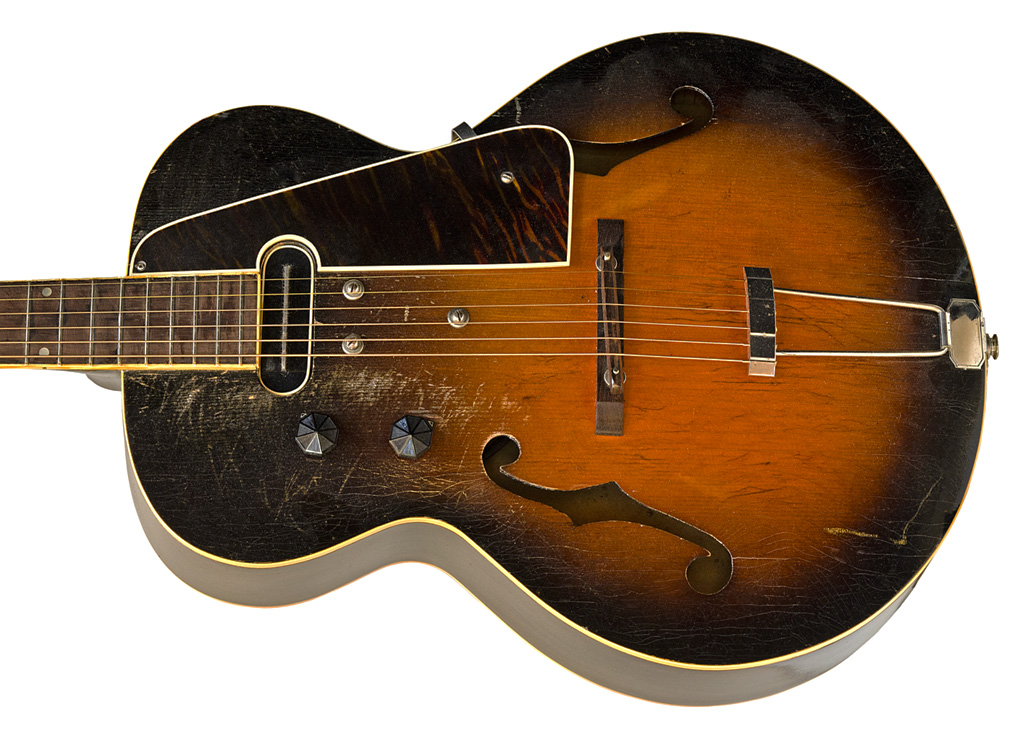
Gibson ES-150
The earliest production Gibson Electric Guitar, the model popularized by Charlie Christian, leading to the pickups being known as "Charlie Christian Pickups".
Serial number DGE 3056


K&F and Fender Lap Steel Guitars
In 1945, "Doc" Kauffman, who had invented the "Vib-Rola" used by Rickenbacher, and Leo Fender, who had been a salesman for Rickenbacher, formed a partnership to manufacture and market lap steel guitars of their own simple and inexpensive design from Leo Fender's home in Fullerton, California.
K&F Lap Steel Guitar
Serial Number 45


Within a year, Doc Kauffman had left, and Leo Fender was marketing similar Lap Steels by himself as the Fender Musical Instrument Company.
1946 Fender Organ Button Lap Steel Guitar
With similar body shape as K&F.
Red button for organ effect.
Lightning bolt on headstock plate.
Available in 1946.
Serial number 1017
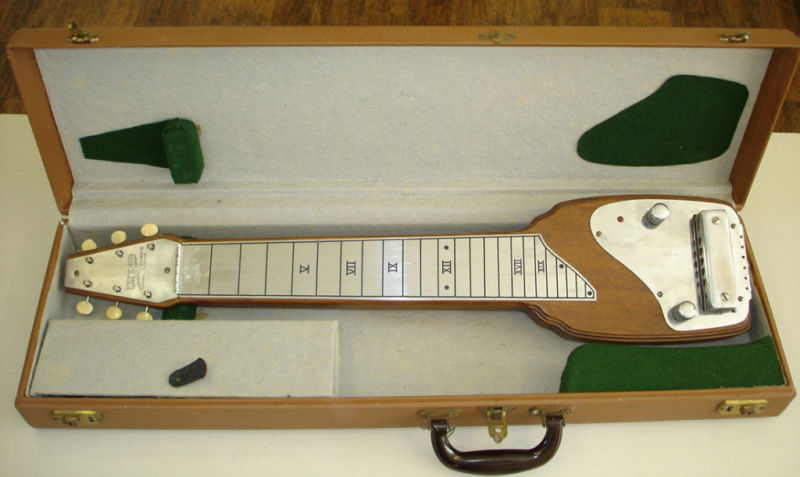
1946 Fender Princeton Lap Steel Guitar
The Princeton had a longer body, joining the neck at the 12th fret.
Available from 1946 to 1948.
Serial number A24


1948 Fender Deluxe 8 Lap Steel Guitar
Available in 1946.
With walnut finish and trapezoidal pickup available in late 1948
No Serial Number
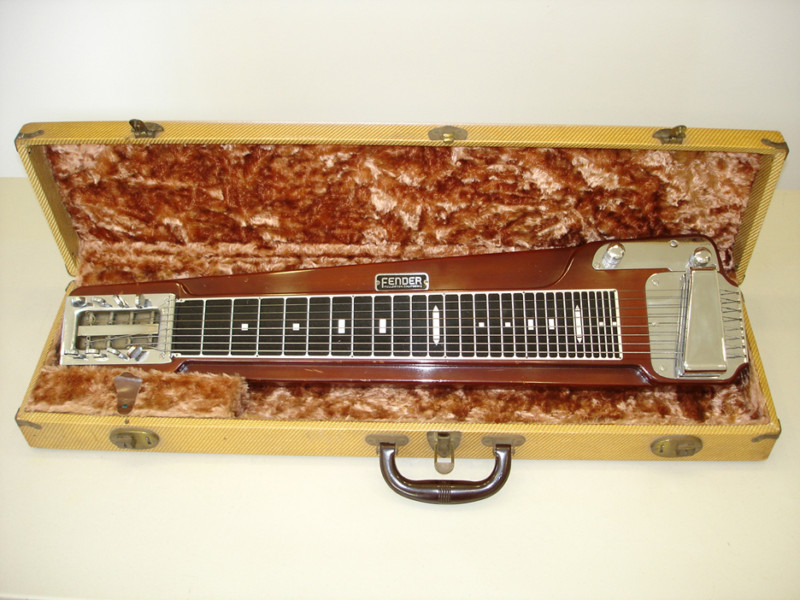
1950's Fender Deluxe 8 Lap Steel Guitar
With features of the multi-neck Stringmaster.
Available from 1950 to 1981
Serial Number 00232
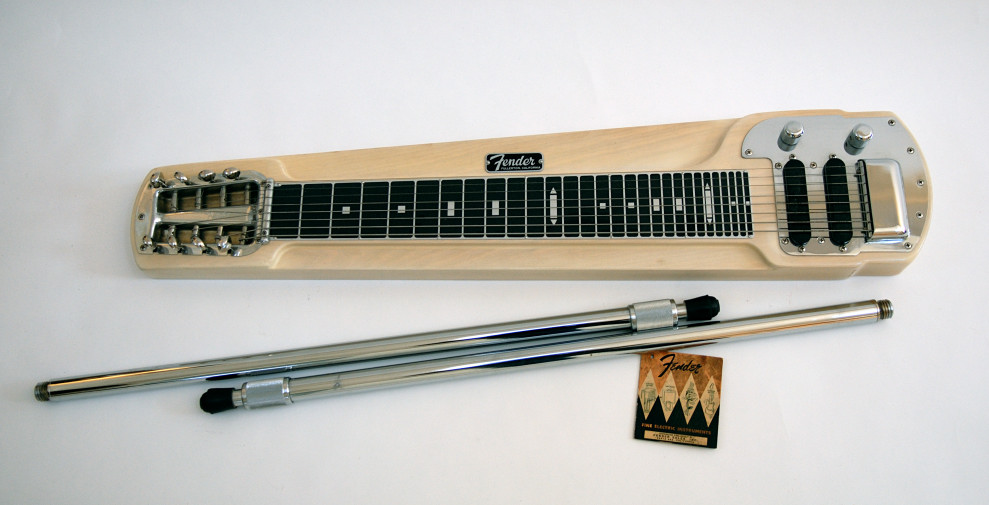
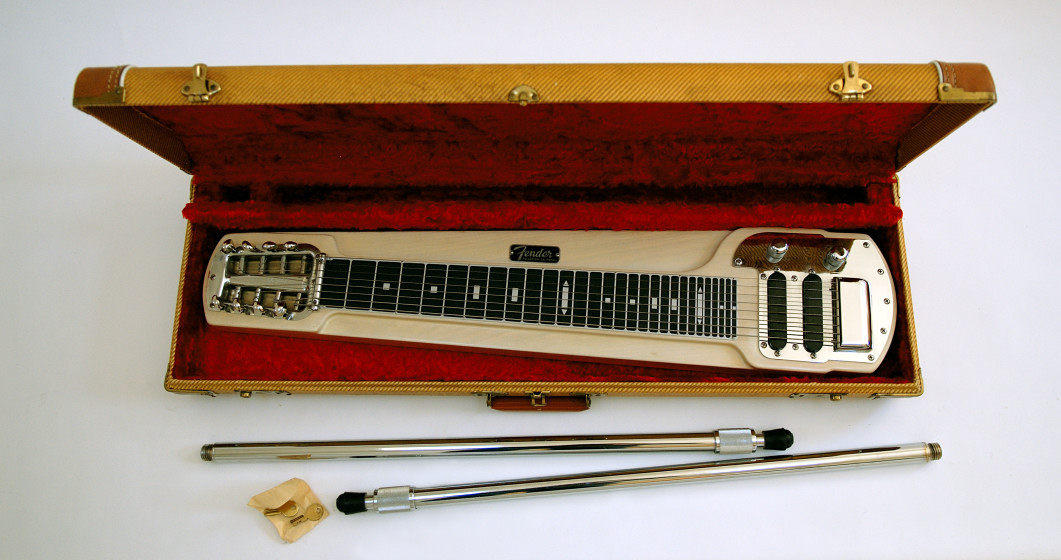
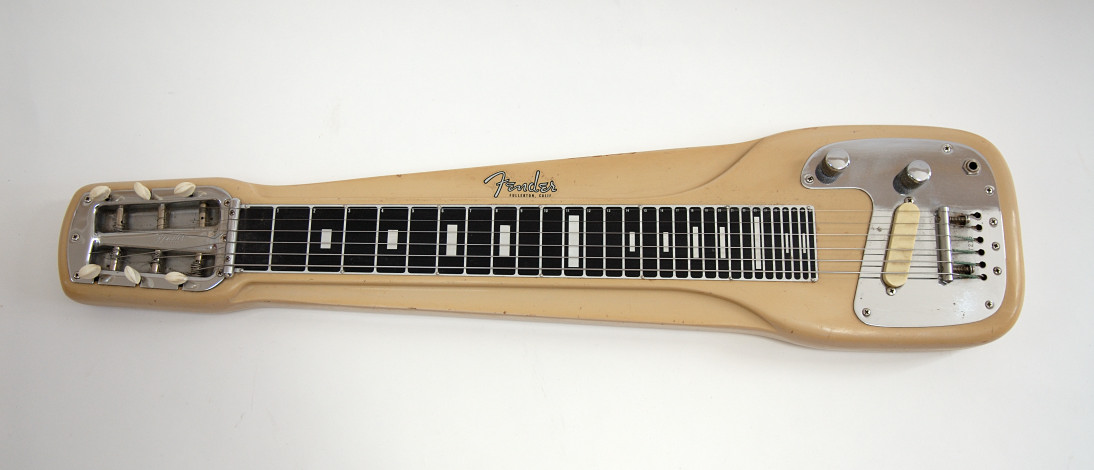
1956 Fender Studio Deluxe
Available from 1956 to 1981
The less expensive Studio Deluxe is lighter, and more rounded vs. the broad, flat sides of the Deluxe 8, with one pickup.
Serial number 7215
vintagemartin.com
To See Robert Corwin's Classic
Photography of Folk and Roots Musicians, visit:
Exhibition, Publication, CD's, Promotion, Web Pages, Tour Books,
to Purchase Photographic Prints, or
If You Have Questions or Suggestions About This Web Site or Vintage Martin Guitars:
e-mail: Robert Corwinentire site copyright ©1998 through 2012 Robert Corwin/Photo-Arts. All rights reserved.